
Join Schrödinger’s Chat
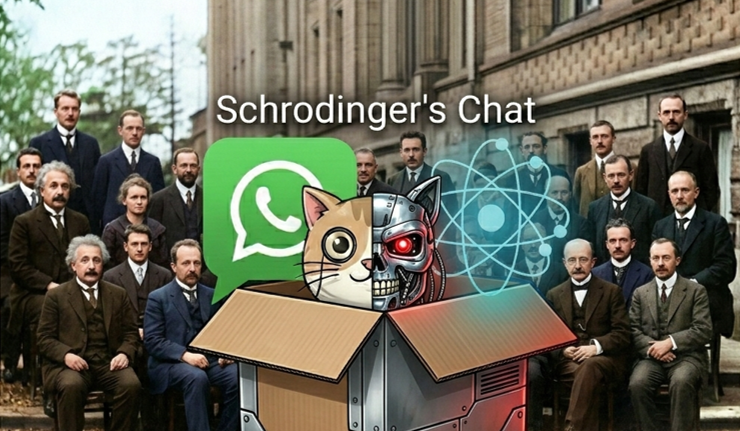
Schrodinger’s Chat is an active community of over 350 Physics teachers and technicians on WhatsApp, who like to help each other by sharing ideas and resources. Sometimes we even make an attempt at being humorous.
Its origins were as the original Isaac Physics WhatsApp group, but once the official group was developed (some politics over ownership), we democratically changed our name and declared independence.
I host the shared google-drive, and have plans to compile the wisdom of the crowd into these webpages, but it will take me some time, so please be patient. As a stop-gap, I’ll start by sharing some of my favourite hand-crafted resources and point you in the direction of lots of other great online resources.
Hopefully, these pages will grow to become a real life-saver for teachers everywhere, particularly if you’re new to the profession or struggling as a solo physicist in your school!
You can request approval to the WhatsApp community here and then will be able to request direct access to the shared google drive. We just ask that you also share your best resource with the community in time.
Here are a couple of example of resources I’ve uploaded that I have used to great success:
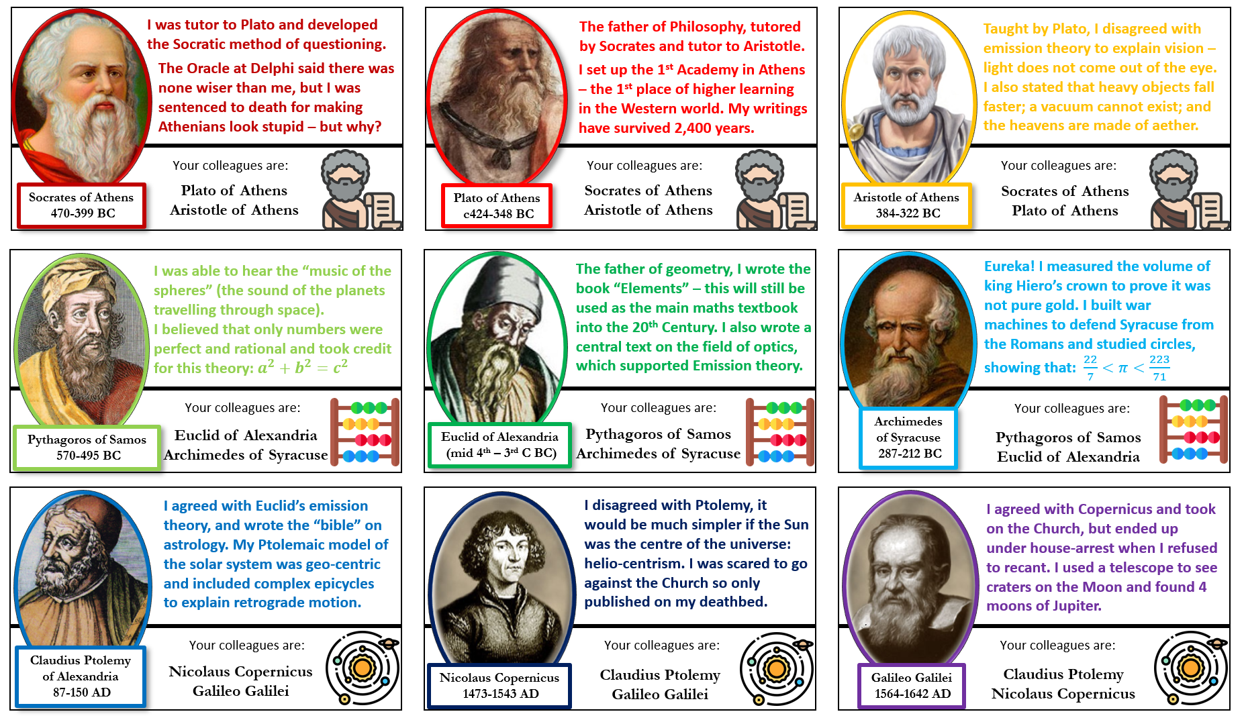
Lab Partner Cards (History of Science)
You may have noticed that a passion project of mine is the History of Science. I saw someone selling a pack of cards used to determine how groups were formed for class practical or activities and was inspired to make something better and sell it for FREE! A few days later and I had crafted 18 sets of trios, each of whom made a significant contribution to a particular field or discovery. Download, print on glossy paper and cut out so you can use them again and again – just make sure the students don’t crease them.
How I use them:
Decide how many pairs or trios you want for a particular practical and deal out that many cards from the set. Hint: Do this after taking the register. As students are reading through the practical instructions they’ll each pick a card at random from the deck. They then have 3 minutes to find their partner(s), introduce themselves in character, learn how they were important to science and then pick a desk to work on the practical together!
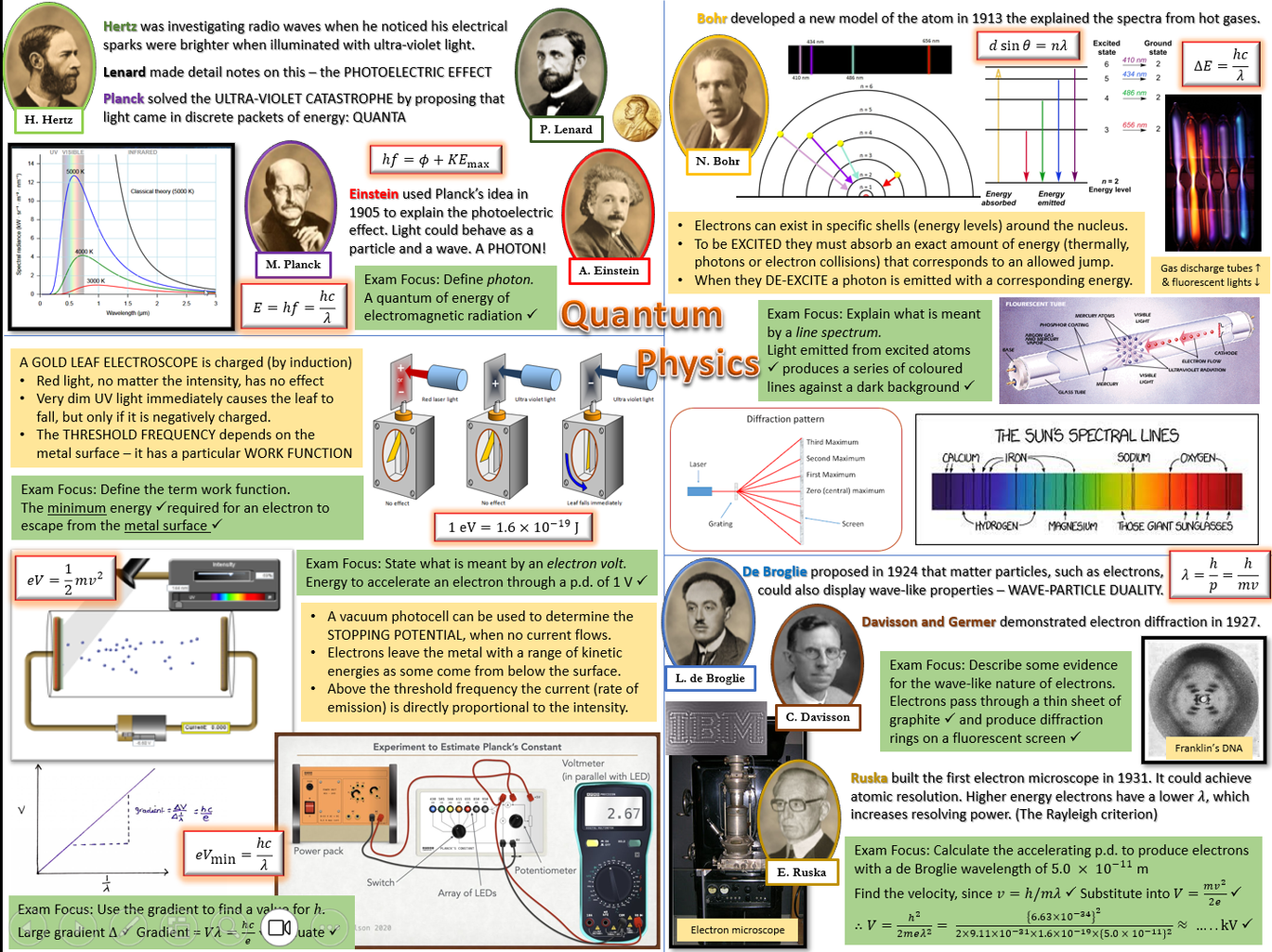
Revision Poster (Quantum Physics)
One of the most effective ways of learning a topic is to consolidate the content and actively make links between the sections. I find posters very effective, and making them colourful and engaging means you can happily spend 5 minutes a week reviewing them.
How I use them:
Model the process of making them during a 2-hour revision lesson, start by cropping the specification into a powerpoint, finding images online, then text boxes and equations. Once you’ve got all the content, rearrange to it’s logical and pretty. As a final iteration, if you’ve done past papers and spot repeated questions, add these as the “exam focus” boxes.
My favourite simulation sites
Nothing quite beats a real-life class demonstration, except when the demonstration goes wrong or doesn’t actually show you what you need to understand (aka electricity). That’s why you’ll need an arsenal of great simulations, not just as a back-up, but for your front line teaching!
1. PhET (Maths & Science)
2. VP Lab
Your content goes here. Edit or remove this text inline or in the module Content settings. You can also style every aspect of this content in the module Design settings and even apply custom CSS to this text in the module Advanced settings.
My favourite content websites
I’m not going to re-invent the wheel here, many came before me and are freely sharing their hard work, so the definitely deserve a shout-out from me…
1. Physics Online (KS4 & 5)
When I was new to teaching, Lewis’ videos were a godsend and helped to buy me time on numerous occasions. His online empire continues to grow and I’d encourage anyone to lobby for a school subscription to his platform(s).
2. Hyper Physics
If you want to learn something properly, so that you seem knowledgeable to your students, this is my first stop. It’s mostly at undergraduate level and they don’t shy away from the maths. I also like the mindmap that shows how all the topics are linked. For example, here’s an overview of Electricity and Magnetism
3. Paul Hewitt's Next Time Questions
These are beautiful cartoons, each of which addresses a particular concept or common misconception. Most of the time the “obvious” answer is not correct. The idea is to end the lesson with the question, give the students time to ponder it and then discuss it in the next lesson. Check them out here.
Your Title Goes Here
Your content goes here. Edit or remove this text inline or in the module Content settings. You can also style every aspect of this content in the module Design settings and even apply custom CSS to this text in the module Advanced settings.
My favourite learning websites
The only reason I survived 12+ years in classroom teaching was because at least two-thirds of the homework tasks I set were essentially “fire and forget”. This freed up my time to plan engaging lessons and focus my marking feedback effectively.
1. Isaac Science
I’ve seen this project grow from it’s embryonic stage while I was doing my PGCE in Cambridge, and the amount of freely available questions, with instant feedback, hints and support is staggering. I’ve done around 12,000 question parts and doubt I’m half-way through. It’s an absolute game-changer, but I’m still coming across schools who haven’t heard of it. I regularly make the pilgrimage to the motherland for their teacher jolly.
2. Seneca Learning
Reading a textbook isn’t a great way to retain information, but it is a necessary first step to learning new concepts. Seneca essentially brings the textbook to life with memes and video clips, but it asks lots of questions as you go to make sure you’re taking in the information. It also allows teachers to track students progress and how much time they’ve spent using it.

Hello world!
Welcome to WordPress. This is your first post. Edit or delete it, then start writing!
 Spanish
  English