
Topic
Development of Practical Skills in Physics
What’s the difference between a scientist and a philosopher? Well a philosopher will make observations and ask the pertinent question: “Why?” They will come up with a theory, e.g. Aristotle declares that “heavy objects fall faster!” and be satisfied. A scientist however will also do some experiments, but if you think they are trying to prove their theories then you couldn’t be further from the truth…


Key Skills
Measurement & Uncertainty
Planning & Implementation
Data Analysis & Graphs
Evaluation & Error Interpretation
Essential for Exams & Scientific Understanding
Physics isn’t just theory — it’s about doing. Through practical work, you’ll learn how to approach real scientific problems using the scientific method, accurately collect and interpret data, and draw meaningful conclusions from your findings. You’ll explore how to identify variables, control experimental conditions, use appropriate apparatus, and minimise errors to make your results more reliable.
Developing these skills teaches you how professional scientists investigate and explain the physical world. You’ll learn how to plan experiments effectively, present your results clearly in tables and graphs, and critically evaluate outcomes to suggest improvements. With a strong foundation in practical skills, you’ll be well prepared for both Year 12 assessments and more advanced study in Physics.
Measuring Instruments
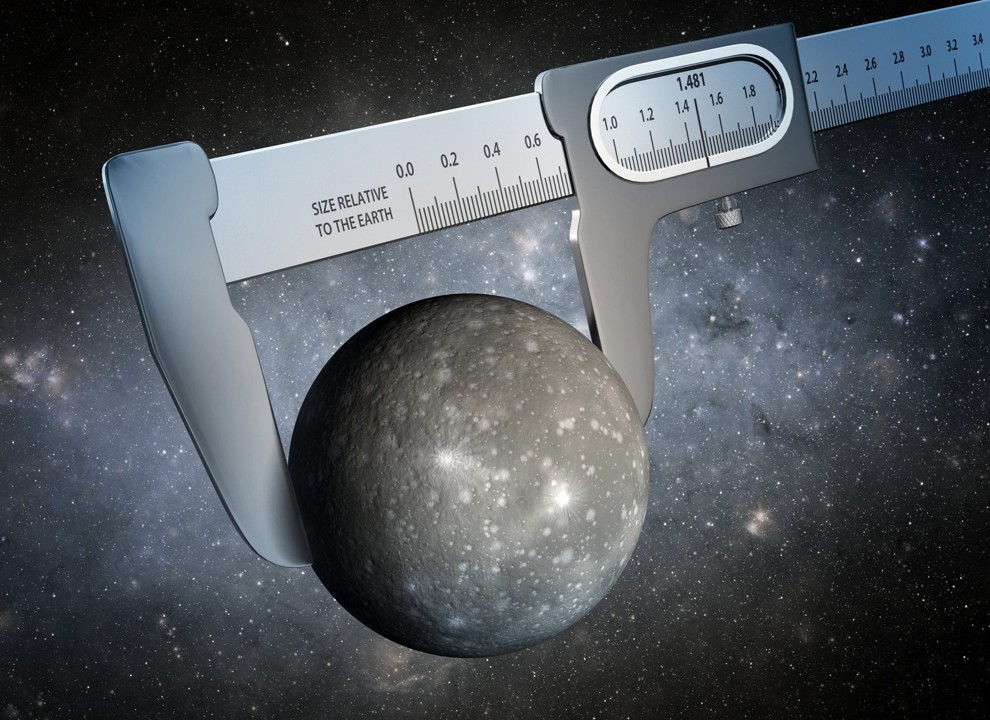
A physicist must appreciate that they don’t exist in a hypothetical universe like the mathematicians do. We make observations and measurements of real-life objects and phenomena. In order to do this we have developed a number of tools or measuring instruments, but each of these has its own limitation or resolution. This restricts how precisely we can measure things, but there is also a fundamental limit – due to the Heisenberg Uncertainty Principle! Let’s worry about that at University, for A-level you’ll need to know how to use these 5 instruments…
- Vernier callipers (precision = 0.1 mm)
- Micrometer screwgauge (precision = 0.01mm)
- Multimeters (voltmeter, ammeter, ohmmeter)
- Oscilloscopes
- Light gates and data loggers
OCR A: 1.2.1 Errors
AQA: 1.2.7 Limitations of Measurements?
Lewis Matheson has taken the specification and turned it into a bite-size student-friendly format. I recommend printing this out and having a learning checklist at the start of your folder for each section:
OCR A – module 1 – development of practical skills
AQA – module 1 – measurements and their errors
Sign up for a free account to Isaac Science and it’ll save and track your progress – working through these problems is necessary to secure that 30-40% of the paper that will be mathsy.
Here you can practice reading some of the key measuring instruments:
I think these are fab, and hopefully your school has a subscription to them.
200 Meters
See below for a quick selection of the relevant videos, you can find Lewis’ full playlist for practical skills here.
Uncertainty
Socrates stated that “True wisdom is knowing you know nothing at all”, Aristotle later said that “the more you learn, the more you know you don’t know” and Thomas Young has been described as “The last man who knew everything.” This was long before the “discovery” of dark matter and dark energy, which now means physicist believe they are completely in the dark about what makes up 95% of the universe.
Physicists are therefore a humble bunch, particularly when it comes to reporting their data, and so should always state an uncertainty when presenting an experimental result. For A-level you’ll need to know how to do the following…
- Find the absolute uncertainty from a measurement or set of data
- Convert between absolute and relative (aka percentage or fractional) uncertainty
- Combine uncertainties to give an uncertainty in a derived quantity
OCR A: 1.2.2 Uncertainty, 1.2.3 End of topic test – Measurement and Errors
AQA: ?
Lewis Matheson has taken the specification and turned it into a bite-size student-friendly format. I recommend printing this out and having a learning checklist at the start of your folder for each section:
OCR A – module 1 – development of practical skills
AQA – module 1 – measurements and their errors
Sign up for a free account to Isaac Science and it’ll save and track your progress – working through these problems is necessary to secure that 30-40% of the paper that will be mathsy.
Here you can practice reading some of the key measuring instruments:
Virtual vernier calliper
I think these are fab, and hopefully your school has a subscription to them.
006: Numerical calculations & data handling
050: Errors and uncertainties
132: Uncertainty in practical work
290: Handling Experimental Data
332: Understanding Errors and Uncertainties
See below for a quick selection of the relevant videos, you can find Lewis’ full playlist for practical skills here.
Core Practicals
Prior to 2015, A-level sciences in the UK had practical exams (similar to coursework), which were marked by teachers and then moderated by the exam boards. Unfortunately this system was open to abuse and has now been replaced by a minimum of 12 core practicals (6 in Y12 and 6 in Y13), which are also assessed by teachers so open to corruption. Over 99% of students will PASS the endorsement, but practical analysis skills are now examined in paper 3, so this part is what really counts.
In order to PASS, you are supposed to have demonstrated the following 5 competencies:
- Follow written instructions
- Applies investigative approaches and methods when using instruments and equipment
- Safely uses a range of practical equipment and materials
- Makes and records observations
- Researches, references and reports
OCR A: 1.2.2 Uncertainty, 1.2.3 End of topic test – Measurement and Errors
AQA: ?
Lewis Matheson has taken the specification and turned it into a bite-size student-friendly format. I recommend printing this out and having a learning checklist at the start of your folder for each section:
OCR A – module 1 – development of practical skills
AQA – module 1 – measurements and their errors
Sign up for a free account to Isaac Science and it’ll save and track your progress – working through these problems is necessary to secure that 30-40% of the paper that will be mathsy.
Dr Dan Jones has made simulations for all 12 AQA Core Practicals
I think these are fab, and hopefully your school has a subscription to them.
080: Success in practical assessments
091: Accuracy in electrical investigations
096: Dynamic experiments using light gates
140: How science works – The use of tables in practical work
302: Research and Referencing
339: Writing Experimental Evaluations
Lewis has made videos covering almost all of the core practicals, the Y13 ones require a subscription. Check them out here:
 English
  Spanish